
The rules of automotive manufacturing have fundamentally changed. What used to be occasional disruptions, such as semiconductor shortages, raw material delays, or logistics bottlenecks, are now constant realities. Today’s automakers face customers demanding rapid model releases, personalized vehicle configurations, and real-time order updates. On top of that, they must manage global supplier networks and regulatory standards that shift faster than design cycles. Those demands keep the pressure on the supply chain to respond to the same challenges.
The automotive industry is now in the smart factory execution era. Competitive advantage lies not in whether an OEM or Tier 1 supplier has a digital strategy, but in how effectively they implement it. Smart factories, powered by AI, robotics, and real-time analytics, are enabling top automotive manufacturers to pivot quickly, reduce recalls, and maintain production continuity amid labor shortages and parts variability.
Driving this urgency is a combination of factors: persistent supply chain volatility, ongoing labor constraints, and evolving market demands that reward agility and punish rigidity. Adding to the pressure are shifting regulations including tariffs and environmental standards. Manufacturers can no longer afford to operate reactively, responding to each crisis as it arrives. The winners are building resilience directly into their operations through integrated digital systems that provide visibility, flexibility, and control, even when external conditions destabilize.
The result is a clear divide in the industry. Organizations executing strategies for smart manufacturing in the automotive industry are surging ahead of those still planning them. And in 2026, that gap is about survival, not efficiency metrics.

Download this guide to discover how ERP systems optimized with smart factory integrated technology can help overcome manufacturing challenges.
Smart factory solutions in automotive extend far beyond installing a robot arm or deploying warehouse sensors. They involve integrating vehicle production lines, connected car data, and supply chain logistics into a single digital command center. Whether it’s real-time tracking of EV battery component sourcing or using predictive analytics to prevent downtime in body-in-white welding stations, these technologies reshape how vehicles are designed, built, and delivered.
In practice, this looks like:
These data collection tools generate actionable intelligence that transforms how organizations make decisions.
At the heart of this ecosystem sits smart factory ERP. It’s the digital backbone that connects manufacturing ecosystems, supply chain networks, quality management, and financial operations. Modern ERP platforms don’t simply track what happened yesterday. They also orchestrate entire value chains, enabling manufacturers to detect market signals and respond in hours instead of weeks.
For automakers and suppliers alike, smart factory investments are no longer optional. Companies that weathered COVID-19 and chip shortages best had advanced digital infrastructures. Today, the bar is even higher, automotive leaders must digitize to comply with emissions regulations, EV incentives, and increasingly localized manufacturing mandates.
This shift has elevated digital transformation from nice-to-have to a survival requirement. Manufacturers still relying on manual planning, disconnected systems, and week-old data simply can’t match the speed and precision of digitally enabled competitors. The performance gap is measurable and growing, not hypothetical. Smart factory leaders demonstrate 15-30% higher productivity, 20-50% faster time-to-market, and significantly lower defect rates than their peers.
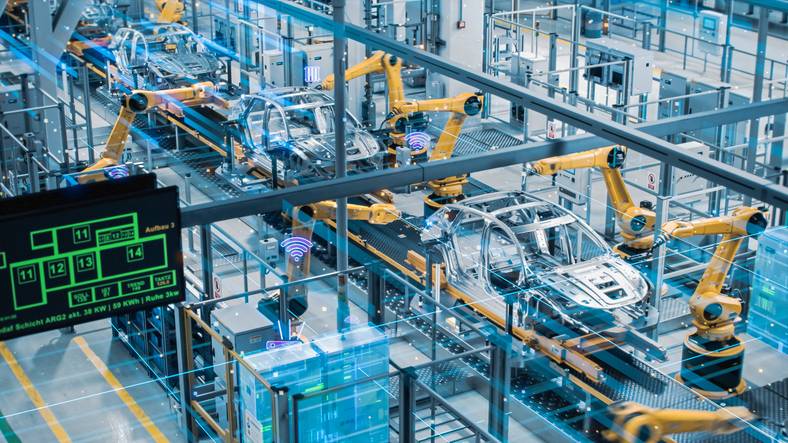
Smart factory tech provides tangible gains in automotive assembly, parts traceability, and production efficiency. According to GlobalTradeMag.com, predictive maintenance reduces unplanned downtime by 30–50%. IIoT-enabled quality systems catch weld defects or torque irregularities before they reach final inspection. Meanwhile, flexible scheduling and ERP-integrated planning enable faster response to late-stage design changes—essential for automakers managing multiple trims and drivetrain variants.
But the most transformative benefit is operational flexibility. Smart factories can reconfigure production processes dynamically based on demand signals, material availability, and capacity constraints. ERP-integrated analytics deliver accurate forecasts that eliminate both stockouts and excess inventory. Suddenly, manufacturers can profitably serve smaller orders and custom requirements that would overwhelm traditional operations. This opens new revenue streams that were previously off-limits.
The cost benefits multiply:
Most importantly, strategic decision-making improves. When ERP platforms integrate financial data with operational metrics, leaders finally see true product profitability, customer value, and process efficiency. This automated visibility enables confident investment in high-return opportunities while eliminating activities that quietly destroy value. It’s the difference between making decisions based on gut instinct versus real-time data-backed certainty.
Automotive manufacturers face unique challenges: legacy MES systems, deeply embedded lean practices, and globally distributed platforms. Here are some other barriers to smart factory adoption, and ideas for overcoming them:
Cultural Resistance
When your team has operated a certain way for years, change feels threatening. Shop floor workers wonder if automation means their jobs are at risk, while middle managers worry about losing the expertise and control that define their roles. These are legitimate concerns that require honest conversation and thoughtful planning. The most successful transformations involve employees in redesigning workflows, showing them how smart systems amplify their capabilities rather than replace them.
Legacy Systems
You’ve invested millions in infrastructure that, while not cutting-edge, gets the job done. The thought of ripping everything out and starting over feels risky and expensive. However, those legacy systems aren’t holding steady. Instead, they’re degrading assets that become more expensive to maintain every year while increasingly limiting your ability to compete. The question isn’t when to replace them, but when.
Cost Concerns
These are natural, especially when you’re looking at a significant upfront investment. But significant savings can be gained through smart factory technology. The key is reframing technology initiatives from IT projects to investments in performance. In the automotive sector, even small improvements to OEE, waste reduction, downtime or inventory can translate to millions in savings.
There are ways to offset the upfront costs and risks associated with implementing Industry 4.0 technology. For example, spreading investment over phased implementations starting with areas that would benefit the most from automation or process improvement. Also, consider retrofitting existing legacy equipment with newer tech to reduce the burden of a total replacement.
Smart factory technology isn’t just an expense—it’s a means for forward-looking manufacturers to protect margin and strengthening long-term performance. As stated in recent research by Manufacturers Alliance (MAPI), “Companies report on average 10–12% gains in areas such as manufacturing output, factory utilization, and labor productivity after they invested in smart factory initiatives.”
Skill Gaps
Modern smart factory solutions have evolved considerably. Today’s platforms emphasize user-friendly interfaces and automated processes designed for existing workforces. With the right training programs and vendor support, you can upskill the team you already have. The real risk is staying put while competitors build organizational knowledge in digital manufacturing that will take you years to match.
This is where experienced business transformation consultants make the difference. They translate technical capabilities into outcomes that matter for your business. Additionally, they design change management strategies that address the human side of transformation, not just the technical side. And they structure phased implementations that prove to be valuable quickly, building momentum and buy-in before asking for major commitments. The barriers are real, but they’re not insurmountable, especially with the right guidance.
Smart factory automation is the present of manufacturing. In 2026, competitive position depends on execution speed and quality, not strategic vision. Companies still operating with disconnected systems and delayed data are losing ground to competitors who can see, decide, and act faster.
The gap compounds quickly. Customer demands keep rising, and regulatory requirements around supply chain visibility, traceability, and sustainability keep tightening. Every quarter you wait is market share you won’t easily reclaim.
The good news is that implementation risk has dropped dramatically. Cloud platforms eliminate headaches, modern interfaces need minimal training, and phased deployments prove value before demanding full commitment. Ready to digitize your automotive production and get ahead of supply chain uncertainty, compliance demands, and evolving customer expectations?
Discover how Ultra Consultants can guide your smart factory transformation before your competition does. Contact us to explore vendor-neutral strategies that align technology investments with your business goals and future initiatives.
Many automotive manufacturers rely on systems that technically work—but still undermine performance.…
Many manufacturers think they have supply chain visibility because they can track…
This post explores how system alignment improves warehouse organization, automates transactions, and…