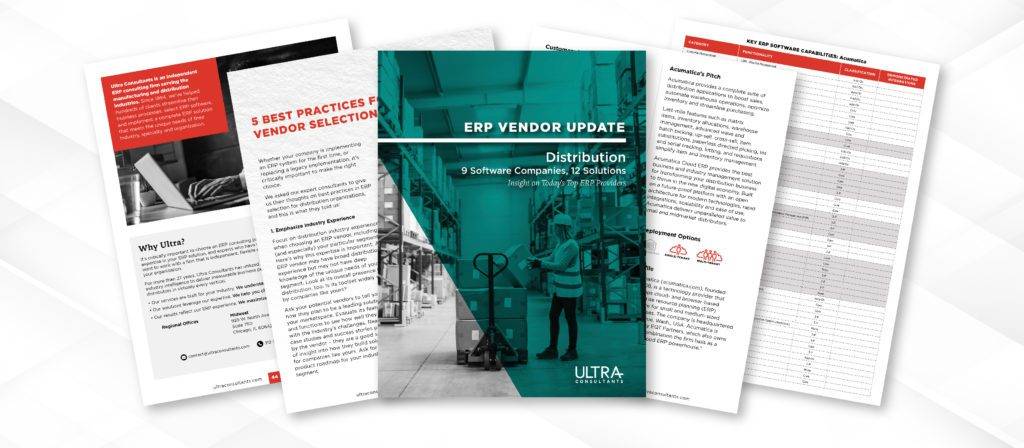
ERP Vendor Update: Distribution (SAP Business One)
To accelerate core processes, maximize efficiency and have an up-to-the-minute view of operations, distributors need the right ERP solution – one that meets the unique needs of the industry and


To accelerate core processes, maximize efficiency and have an up-to-the-minute view of operations, distributors need the right ERP solution – one that meets the unique needs of the industry and
To accelerate core processes, maximize efficiency and have an up-to-the-minute view of operations, distributors need the right ERP solution – one that meets the unique needs of the industry and

Chicago Tube & Iron (CTI) was at a technology dead-end: Its 30-year-old, green-screen Unix-based operations management system was heavily customized, difficult to maintain and impossible to update. It was time for a new ERP. But transformation is never simple.

An old ERP can be the reason you lose customers or fail to maximize their lifetime value. And, what’s more, it may hurt your ability to hire and retain top talent, and cause you to pay higher salaries.

We blog regularly about the benefits an organization can derive from Business Improvement processes (BPI) and the initial steps required to set up the project for success. The steps of a BPI we have covered so far include the following:
Successful, goal-achieving ERP projects require structure. At Ultra, this framework is provided by our methodology, which organizes the transformation process into four phases – business process improvement (BPI), enterprise technology selection, solution implementation management and business value realization. And within each of those phases are five milestones.