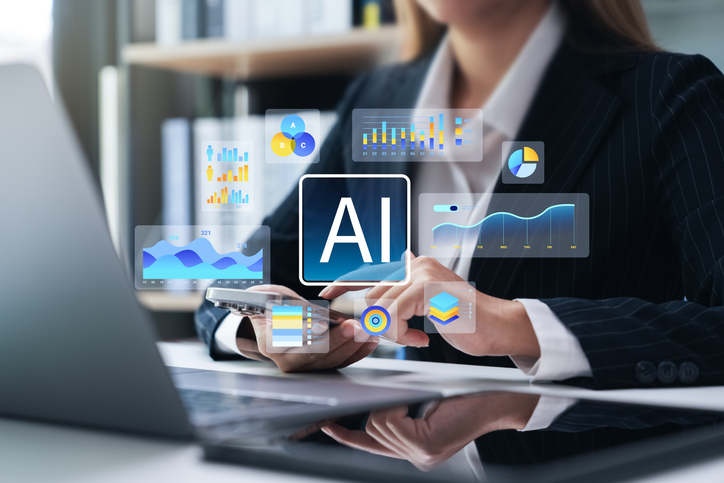

Food and beverage (F&B) manufacturers operate in one of the most complex and highly regulated manufacturing environments. Tight margins, volatile demand, stringent quality, and safety requirements, and increasing consumer preferences and expectations all put pressure on operations. At the same time, organizations are managing aging systems, fragmented data, and ongoing labor challenges.
Artificial intelligence (AI) and machine learning are emerging as powerful tools to help food and beverage manufacturers meet these demands. When your organization applies AI strategically, it improves efficiency, enhances quality and food safety, strengthens supply chains, and enables your enterprise to make smarter decisions.
This article explores why AI matters in the food and beverage industry. It also discusses how it’s being used today, the benefits it delivers, and the challenges you must address for your organization to adopt it successfully.
Download this guide to discover how Industry 4.0 helps food manufacturing operations become more connected, resilient, and future-ready.
Food and beverage manufacturing is a data-rich industry. Production lines generate sensor data, quality inspections produce images and measurements, Enterprise Resource Planning (ERP) systems track inventory and orders, and supply chains create constant streams of transactional information. Historically, much of this data is underutilized due to siloed systems and limited analytical capabilities.
AI changes that by making it possible for organizations to analyze large volumes of structured and unstructured data – in real time – and turn it into actionable insights. For food and beverage manufacturers, Generative AI is important because it helps address several industry-specific challenges, including:
AI enables manufacturers to move from reactive problem-solving to proactive, data-driven operations. It can help your teams anticipate issues, optimize processes, increase food production, and improve consistency across plants.
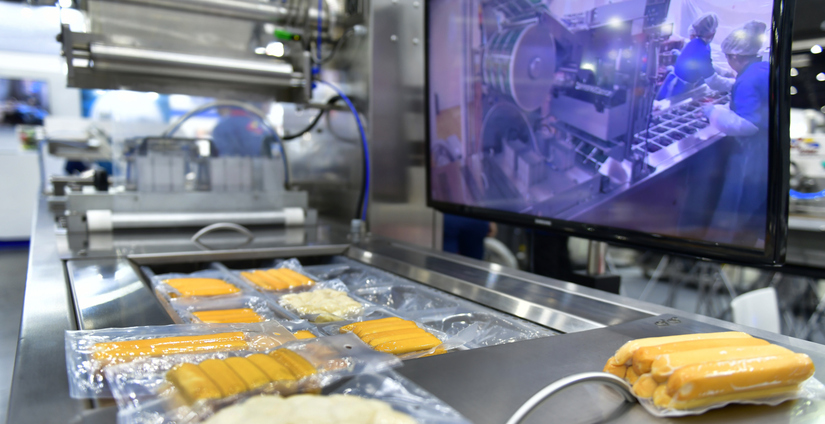
AI adoption in the food and beverage sector is growing rapidly. Organizations are now focusing on practical use cases and capabilities that deliver measurable value.
AI technologies can analyze food and beverage production data from machines, Internet of Things (IoT) sensors, and Manufacturing Execution Systems (MES) to identify inefficiencies and bottlenecks that are difficult for you to detect manually.
Your organization can use these AI tools in the following ways:
By continuously learning from operational data, AI helps improve throughput while maintaining your quality standards.
In food and beverage manufacturing, equipment failures can lead to lost production, product waste, and compliance risks. AI enhances predictive maintenance by identifying early warning signs of degraded and worn equipment.
AI models can analyze your organization’s:
This allows your maintenance teams to schedule repairs before failures occur. Predictive maintenance reduces unplanned downtime and extends the life of your expensive equipment.
Maintaining consistent quality and food safety is non-negotiable in this industry. AI-powered computer vision and analytics tools are increasingly used to monitor products in real time.
Your organization can use AI algorithms to support your product’s quality and safety by:
This automation can improve compliance while reducing your company’s manual inspections. By allowing AI to inspect your products, your team members free up time to focus on higher-value work.
Food and beverage demand can fluctuate due to seasonality, promotions, weather, and consumer trends. AI-driven forecasting models help manufacturers better anticipate demand and align their production numbers accordingly.
AI-driven predictive analytics improves your business’s planning by:
When your business has more accurate forecasts, you can reduce waste, prevent stockouts, develop new products, and improve your customer service levels. This results in better customer experience and consumer trust.
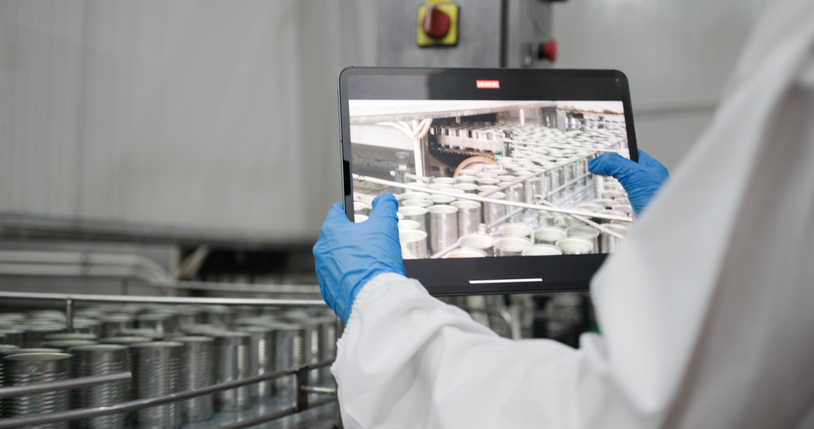
Perishable raw materials and finished goods require precise inventory management. AI helps optimize your inventory levels by balancing demand forecasts, shelf-life constraints, and supplier and retailer lead times.
For your organization, proper inventory management results in:
With the use of AI in inventory management, most companies see better margins and an increased ability to meet their sustainability goals.
AI enhances supply chain management and resilience by identifying risks before they disrupt operations. It can analyze supplier performance, logistics data, and external factors to flag potential issues.
Your company can use AI to:
These uses are particularly valuable if your food and beverage company operates in highly regulated or global food supply networks.
Labor shortages and workforce turnover remain persistent challenges across manufacturing industries. AI can help support frontline workers and preserve their knowledge through:
These tools improve productivity while reducing reliance on tribal knowledge. This makes it easier to onboard new employees and train them. That way, when staff shortages do occur, your productivity won’t be impacted greatly.
When your organization implements AI effectively, it delivers benefits that extend beyond individual use cases. These benefits include:
AI depends on accurate, consistent. and high-quality datasets. Many food and beverage manufacturers struggle with siloed systems, inconsistent data standards, and legacy ecosystems and technology that limit visibility. Other challenges of integrating AI into the food and beverage industry include:
AI systems must operate within strict food safety, data privacy, and regulatory frameworks. Clear governance is essential to manage risk and ensure trust.
AI adoption often requires new skills and new ways of working. Without proper training and change management, even strong AI solutions can fail to deliver value.
AI is not a silver bullet. Organizations that expect immediate transformation without addressing foundational issues often become frustrated. Therefore, it is essential for your organization to have a phased, strategic approach to AI adoption.
AI is reshaping food and beverage manufacturing by improving efficiency, strengthening food safety, reducing waste, and enabling smarter decisions across the enterprise. Organizations that approach AI thoughtfully, in a way that is grounded in strong data, clear objectives, and proven execution, are best positioned to realize its full value.
Successful AI adoption in food and beverage manufacturing requires more than technology. It also requires a clear strategy, strong data foundations, and deep industry expertise.
Ultra Consultants enables manufacturers to move from exploration to execution with a practical, business-first approach to AI. Our goal is to help food and beverage manufacturers build that solid foundation to turn AI from a concept into a competitive advantage.
Our approach includes AI readiness and maturity assessments, identification and prioritization of high-value use cases, and alignment with your existing ERP, MES, and data architecture. We also help develop a roadmap for your organization to adopt AI at scale through implementation and change management support.
We collaborate with your teams to ensure your AI initiatives are aligned with your operational goals, regulatory requirements, and long-term transformation strategies. Ready to explore how AI can transform and streamline your operations? Contact us today to start your AI journey with confidence.
This post will examine why managing quality records outside of an ERP…
This article breaks down how businesses can measure their AI maturity to…
AI won’t fix broken processes; it’ll just make the chaos run faster.…