Food Manufacturing: Process Improvement Strategies That Work
Achieving high operational standards in food manufacturing isn't just about high-quality products. It's also about taking steps to continuously improve the company's operations in order to reduce waste and boost efficiency. With increases in competition and industry regulations, manufacturers need to stay agile and implement strategies to streamline operations and address the challenges ahead.
This eBook explores 6 key strategies food manufacturers can leverage to improve performance.
Discover:
- How to discover which processes drive profit
- How proven Lean strategies can strengthen your competitive
edge
- How how leading manufacturers are using real-time data to stay
ahead of challenges
- Why building a culture of continuous improvement is key to
long-term success

What's inside.
3 Performance Improvement Strategies
4 Key Processes

Lean Practices 5
Data-Driven Decisions 6
Change Management 7
Leveraging Technology 8
Building an Agile Culture 10
Conclusion 11

Performance Improvement Strategies
Improving performance in food manufacturing requires a strategic, multi-pronged approach. From pinpointing value-driving processes to adopting digital tools and fostering a culture of continuous improvement, each area plays a role in creating a more agile and efficient operation.
But before diving into improvement efforts, it's important to set a baseline in a clear understanding of current operations. Bypassing this step makes it difficult to identify which changes will bring the biggest return.
Tools like process mapping, performance metrics and employee feedback can shed light on inefficiencies that might currently be overlooked. By assessing current workflows, manufacturers can then prioritize the initiatives that will drive the most impact.
But performance improvement isn't a one-time project. Because the food industry is constantly shifting due to changing consumer preferences, regulatory updates and supply chain challenges, companies must remain agile to remain competitive. Businesses that regularly refine their processes are better able to adopt quickly.
The following six strategies offer practical methods that food manufacturers can use to meet today's challenges while positioning themselves for long-term growth.
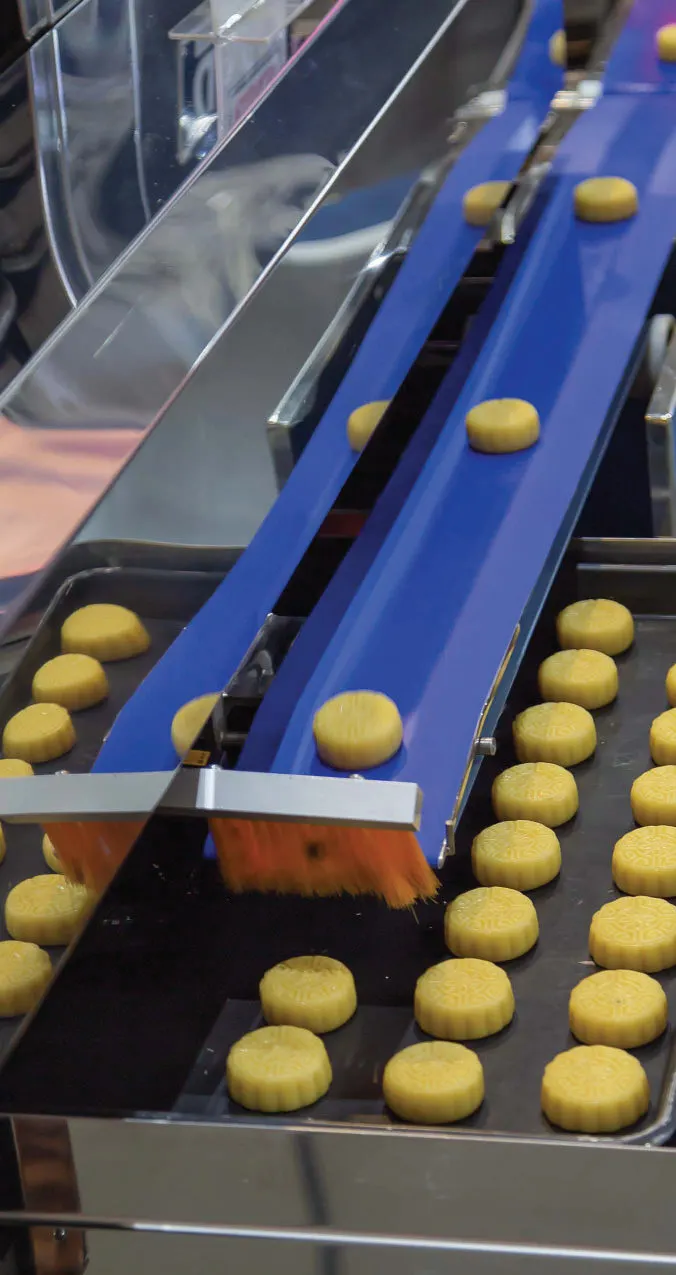
Identifying Key Processes That Drive Value
When we talk about operations in food manufacturing, it's easy to be overwhelmed by the scope of the topic. Operations can entail everything from ingredient sourcing to final product delivery. So, before any improvement strategies are made, it's helpful to focus your efforts on those processes which have the greatest impact on profitability and efficiency.
Value Stream Mapping (VSM)
Value Stream Mapping (VSM) is a process that can help you understand how materials and information flow from beginning to end. Starting with the current state, a visual documentation is created, defining all processes. This step can help you uncover hidden problems, redundancies or wasted efforts. For food manufacturers, VSM could involve mapping activities from ingredient sourcing to final packaging.
A Breakdown of Common Business Processes
A typical manufacturing company will have upwards of 200 to 300 processes in the following areas:
- Production
- Marketing
- Quality
- Sales
- Service
- Engineering
- Accounting
- Customer service
- Human resources
- Supply chain management
- Manufacturing planning
Applying Lean Principles
Increasing material costs, combined with labor shortages and new industry regulations such as the FSMA make it all the more important for manufacturers to streamline operations. This is where Lean principles can help by eliminating waste and improving production workflows. The concept of Lean manufacturing goes back many decades, having been utilized by Ford and Toyota production facilities.1
By identifying and eliminating waste in production processes, Lean helps manufacturers increase productivity, lower costs, and improve product quality. In addition, it stresses a culture of continuous improvement, involving employees to drive improvements. Both of these aspects are vital to the food manufacturing industry where efficiency, innovation and cost control fuel a competitive edge.
"Lean management challenges organizations to align their processes with the goal of continuously improving customer value, ensuring that every activity contributes to the end product that customers are willing to pay for."
—Food Industry Executive In food manufacturing, identifying and eliminating waste is crucial for improving efficiency, reducing costs, and ensuring product quality. Below are the eight common types of waste that can occur throughout the production process.2
The 8 Wastes in Food Manufacturing
Defects – spoilage or incorrect labeling
Overproduction – producing too much ahead of demand
Waiting – idle workers or machines
Non-Utilized Talent – underused employee potential
Transportation – unnecessary movement of materials
Inventory – high levels of stock that might expire
Motion – inefficient employee movement
Extra Processing – unnecessary steps that don't add value

Data-Driven Decision Making
It's no secret that the food and beverage industry operates on thin margins. That pressure, coupled with complex supply chains and tightening regulations, highlights the importance of data management as a key to success.3
Having the right data at your fingertips turns guesswork into strategy. A centralized database such as an ERP system with standardized data across departments enables faster, smarter decisions along with insights that can help with reducing waste or mitigating disruptions. Good data helps with everything from managing suppliers and inventory to ensuring compliance and tracking quality.
But creating a data strategy is only part of the equation. As stated in a recent article in Food Manufacturing, "Even among manufacturers who say they've completed their digital transformation, 61% still collect data using non-digital processes." These manual processes are prone to human error, while digitized collection methods help ensure consistency and reliability.
To really unluck the value of data, manufacturers must also invest in tools that can turn raw information into actionable insights. Tools such as dashboards, predictive analytics and real-time monitoring allow teams to spot trends and manage all stages of the business from equipment performance to inventory levels. With current, accurate data everyone—from the plant floor to the executive suite—can drive daily decision-making with confidence.

Change Management
Changes to operational procedures such as implementing Lean practices, new software systems or revised workflows can be challenging to operators on the plant floor. Adopting to change often requires shifts in behavior, processes and culture, so change management is essential.
Without clear communication plans, training programs and buy-in from leadership, employees may resist changes. This lack of adoption can lead to low morale or inconsistent execution, affecting the impact of your process improvement strategies. Effective change management ensures that everyone understands the why behind the changes, feels involved in the process, and is equipped with the tools to succeed.
This is especially important in food manufacturing, where safety, quality, and compliance depend on disciplined execution. A structured approach to change management smooths the transition and builds long-term buy-in and accountability, increasing the chances that operational improvements deliver lasting results.4
"In an industry defined by constant disruption, knowing what change management is in the food and beverage industry has become a critical skill for survival and success."
—QA Magazine
Leveraging Technology to Streamline Processes
Continuous improvement and digital transformation are no longer optional. Leveraging the right technology, along with strategic process improvements, allows manufacturers to increase efficiency, ensure traceability and maintain competitive advantage. Several key technological trends are transforming the industry and empowering companies to respond quickly to market demands and regulatory changes, positioning them for long-term growth.
Automation and Robotics
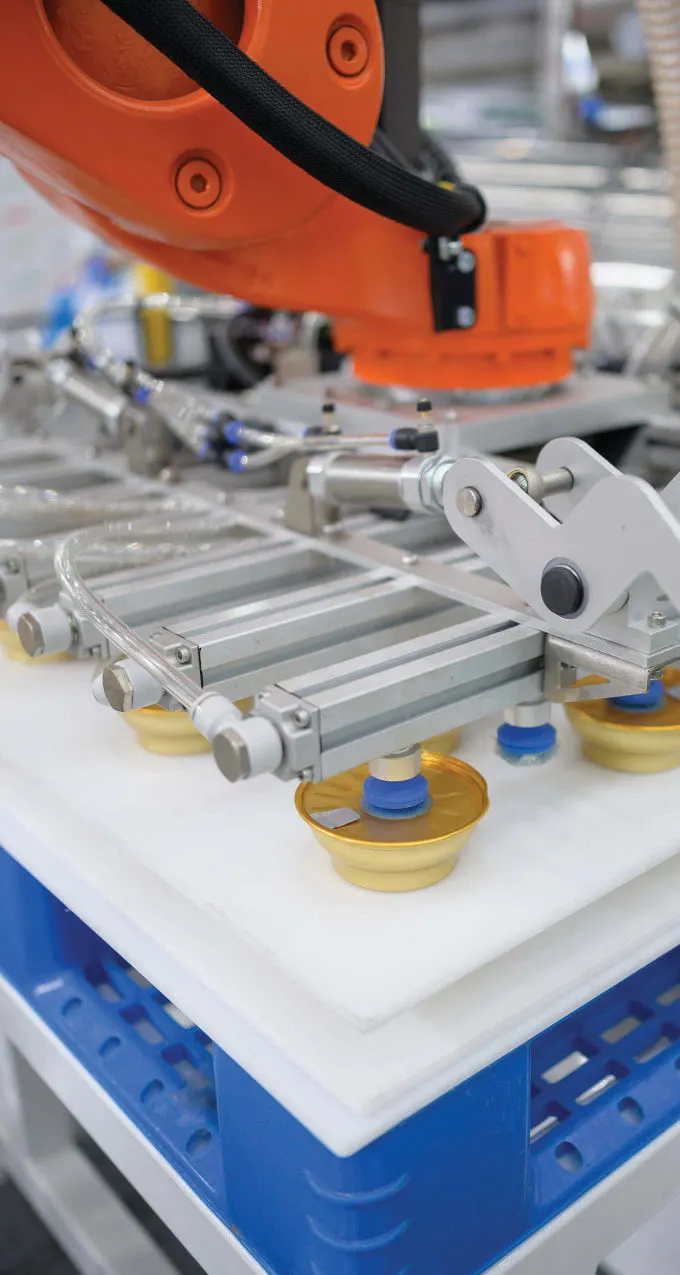
Automation systems such as collaborative robots (cobots) and automated storage and retrieval systems (AS/RS) are transforming the industry. From robotic pick-and-place arms to automated packaging lines, automation improves consistency and speed while reducing labor costs.
The benefits of automation can be felt through improvements in production efficiency, reduction in labor needs, and consistent product quality, among others. But the high costs and specialized skill sets required for adoption of automated systems can hinder accessibility for smaller manufacturers.5
ERP and MES Systems
Emerging technology is taking a lead role in the staple software systems of ERP and MES. From artificial intelligence (AI) to the internet of things (IoT0 and machine learning (ML), these new tools enable companies to gain unprecedented insights to improve decision-making. Whether optimizing the supply chain, improving demand forecasting or monitoring production processes in real-time, today's ERP and MES impact procurement, production, quality control and logistics like never before.6
AI and Predictive Analytics
Data analytics isn't a new concept for the food manufacturing industry. It's been used to gain insight into a multitude of areas within operations, including supply chain/procurement, quality control and consumer trends.7
Over the past few years, however, the focus has turned to AI models which can forecast demand, optimize maintenance schedules, or analyze supply chain risks. Predictive maintenance, in particular, reduces unplanned downtime. According to a recent article, "manufacturers using predictive maintenance systems have reported a 30-50% decrease in machine downtime, along with a 10-40% reduction in maintenance costs."
The power of AI can also be leveraged to improve quality control, reducing the risk of product recalls. For example, manufacturers can use machine learning to identify variances in key parameters such as temperature to spot potential spoiling or contamination.8

Building a Culture of Continuous Improvement
To stay competitive, it's critical to constantly adapt and improve business. The continuous process improvement strategy allows your business to drive ongoing growth and achieve a competitive edge through incremental changes to your existing business processes. These small changes can have a big impact on enhancing efficiency, minimizing process variability and delivering superior customer experiences.
A successful continuous improvement program depends on having the right company culture behind it. Without a mindset that embraces learning, curiosity, and iteration, even the best strategies will lose momentum. It starts with leadership that consistently model transparency, accountability, and a willingness to learn, setting tone for the entire team.
In a culture of continuous improvement, employees are empowered to recognize and address areas that need enhancement. This approach relies on data to uncover inefficiencies, define goals, and track progress over time.
By grounding decisions in measurable results, teams are better able to focus their efforts, stay aligned, and understand the impact of their work. Over time, this mindset turns improvement from a onetime project into a lasting part of the culture.
10
Conclusion
Achieving operational excellence in food manufacturing is a marathon, not a sprint. It requires a 360-degree view of operations, a commitment to continuous improvement, and the willingness to evolve with changing technology and market demands.
By identifying key processes that drive value, using data effectively, managing change strategically, embracing technology, and building a supportive culture, food manufacturers can significantly improve performance and resilience. Companies that succeed in these areas don't just survive, they thrive.
About Ultra Consultants
Ultra Consultants provides business process improvement consulting services tailored to the unique needs of food manufacturing companies. We work closely with organizations to assess current operations, identify inefficiencies, and design streamlined processes that drive measurable results.
Our approach combines industry insight with a focus on technologyenabled business transformation to deliver sustainable operational improvements. To bring our expertise to your doorstep, request your free discovery call at ultraconsultants.com.
11 References
- A Brief History of Lean. Lean Enterprise Institute. https://www.lean.org/explore-lean/a-brief-history-of-lean/
- Drive Efficiency with Lean Management in Food Processing. (2024). Food Industry Executive.
https://foodindustryexecutive.com/2024/05/drive-efficiency-with-lean-management-in-food-processing/
- Burton, S. The Advantages of a Data-Driven Culture for Food Production. (2022). MRO Magazine.
https://www.mromagazine.com/features/the-advantages-of-a-data-driven-culture-for-food-production/
- Schneider, K. What Is Change Management in the Food and Beverage Industry — and Why Is It Key to Long-Term Growth? (2025). QA Magazine
https://www.qualityassurancemag.com/article/change-management-in-the-food-and-beverage-industry/
- Inniger, M. Five Trends That Will Impact the Food Industry For Many Years. (2022).
https://www.nist.gov/blogs/manufacturing-innovation-blog/five-trends-will-impact-food-industry-many-years
- Ojha, R. Digital transformation: Why it matters for the food and beverage industry. (2025). ERP Today.
https://erp.today/digital-transformation-why-it-matters-for-the-food-and-beverage-industry/
- Ajjan, H. Top 7 Uses of Data Analytics in the Food and Beverage Industry. (2024).
https://vocal.media/education/top-7-uses-of-data-analytics-in-the-food-and-beverage-industry
- Predictive Quality Analytics in Manufacturing: How AI and Machine Learning are Transforming the Industry. (2023). Manufacturing Tomorrow.
https://www.manufacturingtomorrow.com/article/2023/03/predictive-quality-analytics-in-manufacturing-how-ai-and-machine-learning-are-transforming -the-industry/20286
12