Technology has always been a part of manufacturing and distribution. From the first mechanization to steam-powered machinery, computers and now the Internet of Things (IoT), each new iteration has reshaped how work gets done. Today, artificial intelligence (AI) is the next big shift. But unlike the advancements of the previous stages, AI can shape decision making, planning, logistics and even how employees think about their roles.
For today's leaders, the question now isn't whether AI will impact manufacturing and distribution. It's clear that horse has left the stable. The real question is how to prepare teams to thrive alongside it. That goes beyond implementing new software or upgrading equipment. It's about upskilling employees, addressing resistance, and helping people see the potential in AI to make their jobs easier.
The future is happening right now, across factory floors, warehouses, and supply chains. But successful AI initiatives depend on more than just technology. According to a recent study from NAM (National Association of Manufacturers) "82% [of manufacturers] cite a lack of AI-ready skills as the top workforce challenge."1 Companies that invest in their workforce along with AI tools will gain a lasting advantage. Those that don't risk stalled adoption, low morale and lower returns on their AI investments.
This eBook explores how manufacturers and distributors can prepare their workforce for an AI-driven future.
2
What's inside.
AI Literacy and Skills 3
Job Change in AI Adoption 4
Leading People; Not Just Implementing Tech 5
Collaboration with AI 6
Looking Ahead 7 3
AI Literacy and Skills: Building a Common Language Around AI
The term "AI literacy" refers to more than just knowing how to use AI-powered tools. It's about understanding the technology and being able to capitalize on its potential for business growth, while using it ethically and recognizing its limitations. AI literacy does not mean turning everyone into data scientists. It means helping people understand what AI is, what it isn't, and how it affects their specifi c role.
In manufacturing, AI literacy might involve explaining how predictive maintenance systems use sensor data to forecast equipment failures before they happen. On the distribution side, it could mean understanding how AI-driven demand forecasting adjusts inventory levels or how route optimization software reduces delivery times. These explanations don't need to be technical. They need to be relevant.
Understanding the how and why behind AI tools and initiatives can help employees gain confidence in working with AI. Employees should understand that AI systems analyze data, identify patterns, and make recommendations or predictions. They should also understand the limits of AI and depends on quality data, human oversight, and clearly defined goals. When workers understand this, AI becomes a tool, not a mystery.
Awareness of AI functionality is just the start. Basic data literacy such as interpreting dashboards, understanding trends, and asking the right questions of AI outputs is essential. Operators may need to learn how to respond to AI alerts. Supervisors may need to understand how AI prioritizes tasks. Managers may need to interpret AIgenerated insights to make better decisions.
Implementing AI into the manufacturing or distribution environment isn't just about technology, it's also a cultural change where employees are supported through robust training programs, data is effectively managed, and new AI tools are grounded in achievable high-value use cases.2

Job Change in AI Adoption
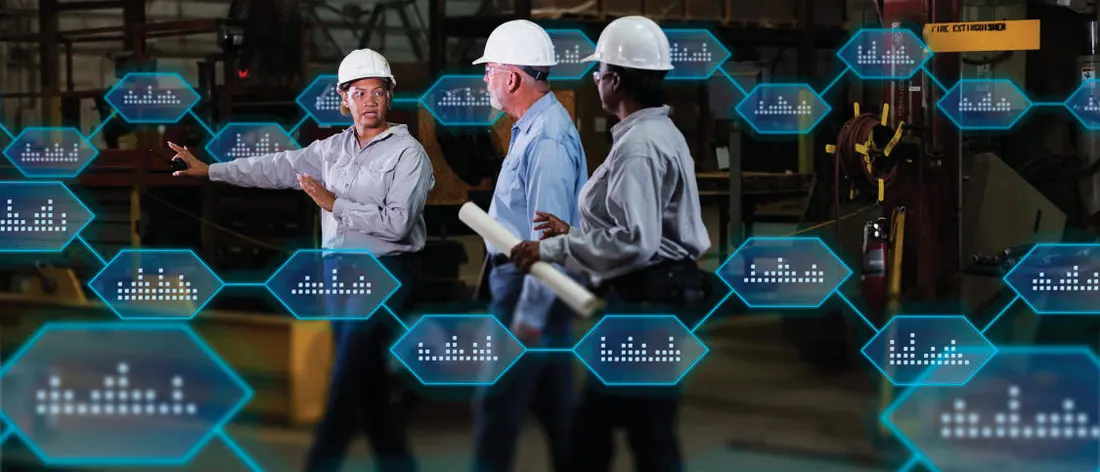
When it comes to AI adoption, fear is one of the biggest challenges. This is especially true in manufacturing and distribution. Concerns about job security, increased monitoring and



relying on systems for decision making all make the need for effective communication all the more urgent.
It starts with leadership explaining the reasons for the AI project, what problems it addresses and how success will be measured. Involving staff from the beginning helps replace fear with understanding, establishing ownership of the changes. Positioning AI tools as a help to workers, not a replacement, adoption improves. Clear policies around data use and monitoring further build trust.
Job loss is a common concern, but as explained in a recent article on ManufacturingTomorrow.com, "AI isn't replacing people. It's replacing the tasks people no longer have the capacity to do."3 Studies still show that "the manufacturing skills gap in the U.S. could result in 2.1 million unfilled jobs by 2030."4 Tasks evolve faster than jobs disappear.
For example, planners could move from scheduling production manually to using AI to analyze data to automate complex schedules; inspectors can make the shift from visual checks to interpreting AI-driven insights into even subtle defects, and supervisors can spend more time on analytics and optimization. Rather than threatening manufacturing jobs, AI can be viewed as a tool to reduce the monotonous tasks, helping workers improve productivity, efficiency and decision-making.5 5
Leading People; Not Just Implementing Technology
So how can leaders help smooth the transition? The answer is change management and leadership sets the tone. Employees are observant and notice if the way leaders talk about AI is matched by their actions. Inconsistency, such as promoting innovation while simultaneously cutting training budgets, can undermine trust in AI initiatives. Leaders don't need deep expertise in AI tech, but they need to be engaged—asking for feedback, participating in training activities and clearly communicating how AI supports long-term company success, not just short-term cost savings.
Effective organizational change management (OCM) begins when organizations align technology, processes, and people from the outset. This means OCM must take its rightful place alongside technology project planning, not as an afterthought following go-live. Aligning people, processes and technology from the outset sets the stage for employees to feel informed, respected, and included in the transition. Change sticks when people can clearly see how AI fits into their own future roles and career paths, not just the organization's strategic roadmap.
"We are now in an era of augmented intelligence, where automation and AI are working in concert with people to improve overall performance and output. Instead of replacing jobs, new jobs are being created in areas such as AI, data science, robotics, model-based systems engineering and related functions. Manufacturers investing in upskilling and reskilling their workforce are not just future-proofing operations but establishing a catalyst for innovation."6
—Manufacturing Leadership Council 6

Leading People - continued...
This means planning and funding training and reskilling, change enablement, and ongoing communication as core components of AI programs, not as secondary activities. Transparency around how AI tools will be used, where human oversight remains essential, and how risks such as bias are managed is critical.
While training is a critical component to successful AI-driven change, traditional methods often fall short. Relying on onetime workshops, generic e-learning programs, or overly technical sessions just don't have the impact necessary to inspire adoption—especially in manufacturing and distribution environments where time is limited and relevance matters.
Effective AI training needs to be practical, role-specifi c, and ongoing. A practical focus on how AI will impact daily work, using real operational scenarios helps employees learn by doing. Instruction should cover how to use the AI tools, how to interpret the data insights it provides, and troubleshoot AI-powered systems.7
Far from a one-and-done occurrence, learning opportunities need to be embedded into daily operations through refreshers and on-demand support, especially as AI systems, data and processes evolve. Above all, training should be positioned as a way for employees to acquire new skills to enhance their value and career growth. Part of this evolution is ensuring that the culture supports innovation and experimentation.8
Collaboration with AI: Humans and Machines Working Together
Humans excel at judgment, creativity, ethical reasoning, and contextual understanding. AI excels at analyzing vast amounts of data quickly and consistently. It's these unique skills that contribute to successful AI implementations in manufacturing and distribution through the collaboration of humans and machines.
For example, AI can identify patterns in production data that suggest a quality issue. A human decides how to respond, balancing cost, safety, customer impact, and operational constraints. AI can optimize warehouse layouts, while humans decide how to implement changes without disrupting workflows.
This collaborative mindset should be reinforced culturally. Organizations should recognize and reward employees who embrace AI collaboration by learning new tools, helping others, and contributing to better outcomes. Recognition reinforces the message that AI fluency is a valued skill. When AI is positioned as a partner rather than a supervisor, workforce adoption becomes far more natural.



Looking Ahead: Building a Resilient, Future-Ready Workforce
AI will certainly shape the future of manufacturing and distribution. But the outcome will be shaped by people's response to it. Rather than replacing human labor, smarter tools will help make the most of human capabilities.
Manufacturing and distribution have always been industries of adaptation. The companies that thrived through previous periods of change did it by bringing their workforce along for the ride. AI is no different.


Companies that successfully navigate the changes AI will inevitably bring are those that take a proactive approach. Through early AI literacy and effective change management, they will build company cultures that embrace continuous improvement and collaboration, while ensuring that technology serves the workforce. The future belongs to organizations that understand that the smartest factories and supply chains are powered by AI along with people who know how to work with it.

About Ultra Consultants
As AI-driven innovation continues to accelerate, a company's ability to adapt is a key competitive advantage. Ultra Consultants' Organizational Change Management (OCM) services help prepare teams for digital and AI-enabled transformation. By aligning people, processes, and technology, Ultra supports organizations in adopting new tools and ways of working with confidence. The result is a resilient, change-ready culture that continuously improves and gets the most value from AI and digital initiatives.
For more information and additional resources on how to bring our expertise right to your doorstep, visit us at ultraconsultants.com.

References
- NAM and MI: AI Will Strengthen the Manufacturing Workforce. (2025).
https://nam.org/nam-and-mi-ai-will-strengthen-the-manufacturing-workforce-34550/?stream=policy-legal
- Preparing for the AI-Driven Future in Manufacturing: Strategies for Business Leaders. (2024). https://www.iiot-
world.com/smart-manufacturing/preparing-for-the-ai-driven-future-in-manufacturing-strategies-for-businessleaders/
- The Rise of the Invisible Workforce. (2025). https://www.manufacturingtomorrow.com/article/2025/12/the-rise-of-
the-invisible-workforce-the-most-important-ai-breakthroughs-of-2025-for-packaging-manufacturers/26675
- NAM News Room. 2.1 Million Manufacturing Jobs Could Go Unfilled by 2030. (2021). https://nam.org/2-1-million-
manufacturing-jobs-could-go-unfilled-by-2030-13743/
- Bradford, M. Will AI Take My Job in Manufacturing? (2025). https://www.foodengineeringmag.com/articles/102942-
will-ai-take-my-job-in-manufacturing
- Legan, B. AI-Driven Factories of the Future: It's a Lot More than Just Autonomy. (2025). https://manufacturing
leadershipcouncil.com/ai-driven-factories-of-the-future-its-a-lot-more-than-just-autonomy-37813/
- Prepare Your Industrial Manufacturing Workforce to Embrace AI. (2025). https://www.mpgtalentsolutions.com/us/
en/insights/prepare-your-workforce-for-ai-in-the-manufacturing-industry
- Seven Leadership Practices for Successful AI Transformation. (2025).
https://www.lse.ac.uk/study-at-lse/executive-education/insights/articles/seven-leadership-practices-for-success ful-ai-transformation