2026 ERP Readiness Guide
2026 ERP Readiness Guide
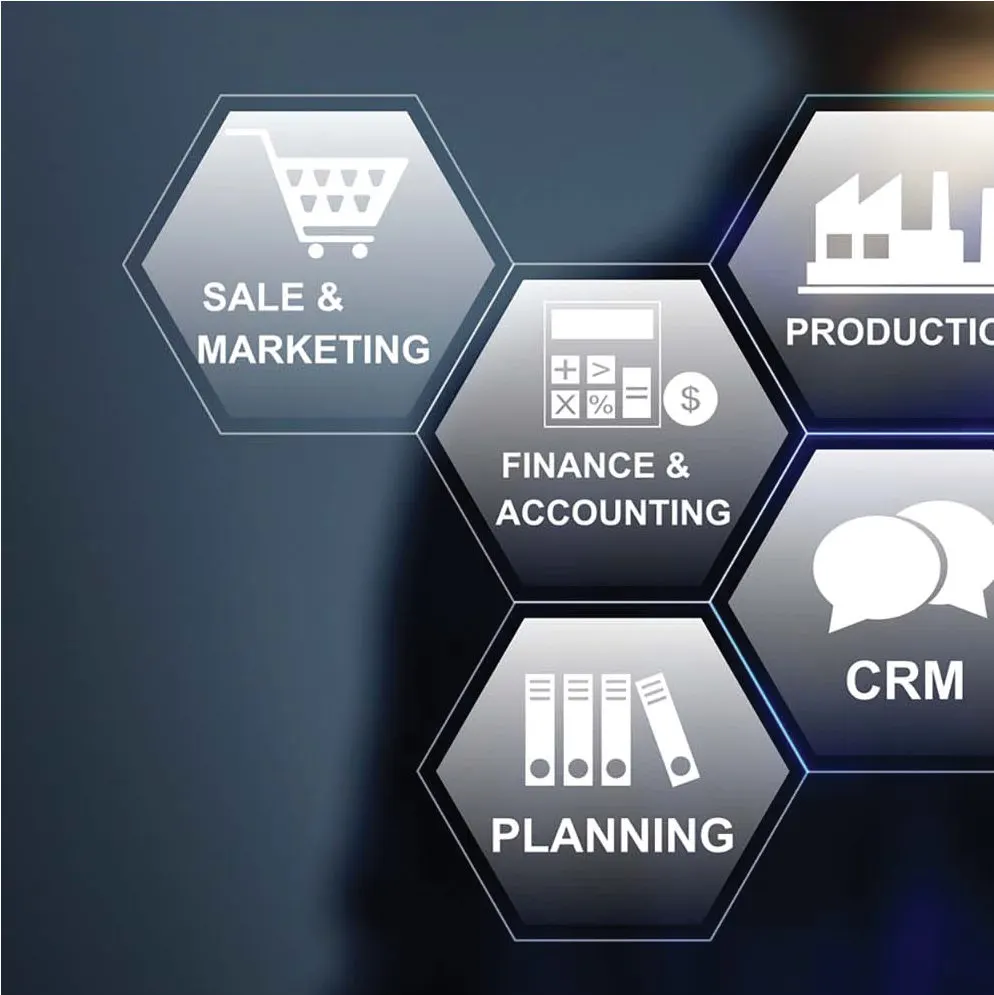
Enterprise Resource Planning systems are no longer the tools for accounting and inventory management they started out as. Today, ERP platforms are the hub for manufacturing and distribution operations. By connecting data from departments including finance, production, procurement, warehouse and customer service, they create a single source of truth for the entire organization. As the manufacturing and distribution sectors continue to face disruption from customer demands, supply chain challenges and more, modern ERP creates the foundation to support resilience and growth.
Instead of focusing just on technology, this eBook delves into readiness, alignment of people and process, and how to ensure long-term value from an ERP investment. This guide is designed to help manufacturing and distribution leaders understand:
- When you're ready for an ERP system
- What capabilities matter most in 2026
- How to select a solution that aligns with your current needs and future strategy
2026 ERP Readiness Guide 2
What's inside.
Why ERP Matters in 2026 3
When It's Time to Replace an Existing System 4
5 ERP Capabilities That Matter
Defining Clear ERP Objectives 6
7 ERP Selection Readiness
10 Change Management and Organizational Readiness
10 Implementation Best Practices and Common Pitfalls
11 Life After Go-Live: Continuous Improvement
11 Preparing for ERP Success in 2026 and Beyond
2026 ERP Readiness Guide 3


Why ERP Matters in 2026
Manufacturing and distribution companies are under constant pressure to reduce cost, improve service and do more with less. At the same time, unpredictable customer demand, fragile supply chains and data-driven competition all make for a complex business environment.
With all this as a backdrop, ERP systems can't just deliver on basic transaction processing. Organizations need real-time visibility into their operations, faster data based decisionmaking and connected shop floor systems—and ERP must support those requirements.
The difference is clear. Organizations that still rely on siloed software and legacy systems often struggle through manual workarounds, inaccurate data and limited visibility into key performance. But manufacturers and distributors that invest in modern ERP solutions are better positioned to deal with today's challenges by improving forecast accuracy, optimizing inventory levels, streamlining production planning and enhancing customer service.
"38% of manufacturers say that analytics platforms and ERP systems
are the software projects that provide the quickest impact in
uncertain times."1
| Oracle
2026 ERP Readiness Guide 4
ERP Readiness and Knowing When It's Time to Replace an Existing System
Whether your company needs its first ERP or is evaluating whether your current ERP still pulls its weight, readiness begins with acknowledging that the status quo is no longer working.
Manual Processes
A strong indicator of readiness is if your teams are using manual processes or workarounds to compensate for a lack of a modern, centralized ERP. Using spreadsheets, offline tools, or duplicate data entry processes to manage inventory, production or financial reporting don't enable efficient operations. These manual workarounds can also indicate that users don't want to use an existing ERP or are actively seeking out better ways to handle data.
Data Management Issues
Can you easily view data across departments? If not, the lack of real-time cross-functional visibility is another readiness signal. If it requires days to close the books, reconcile inventory or generate performance reports, your organization can't adequately respond to demand changes and supply disruptions or make informed decisions.
Technical Challenges
Time marches on and so does technology. Technical constraints also play a major role in readiness assessment. Older ERP systems may not be able to support cloud deployment, mobile access or advanced analytics. Plus, as companies adopt new technologies on the shop floor such as IoT-enabled equipment, automation or third-party logistics partners, an ERP that can't easily integrate becomes a bottleneck. If upgrades to the existing system are expensive, risky or are no longer supported by the vendor, replacing the system is a must.
Lack of Scalability
Are your systems growing with your business? Business growth and change frequently expose ERP misalignment. The addition of new product lines, acquisitions or new facilities can shine a light on systems and processes that were designed for smaller or less complex organizations. When it limits scalability or forces separate, inconsistent processes across locations, it's time to consider a new ERP.
In 2026, the ability to leverage real-time data, enable advanced planning, support automation, and adapt quickly to market change isn't optional. If the existing ERP can't support these priorities, it is not just outdated, it's a barrier to success. 2026 ERP Readiness Guide 5
ERP Capabilities That Matter for Manufacturing and Distribution
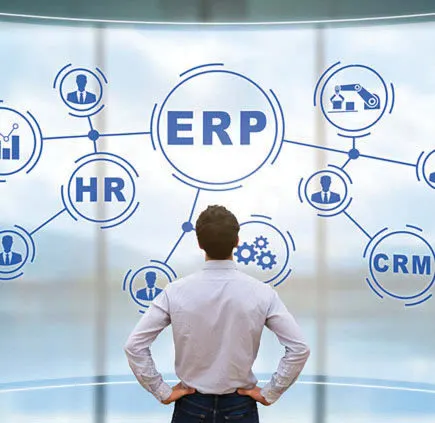
Essentially, an ERP system brings financial information, operations, and supply chain activities together under one platform. This creates consistent data and standardized workflows across the organization. For manufacturers and distributors, this unified system enables real-time visibility, better coordination and more reliable decision-making.
Core ERP capabilities typically include financial management, inventory and warehouse management, procurement, sales and order processing, production planning, quality management, and reporting.
- Financial management remains essential for
centralized accounting, compliance, and performance tracking.
- Inventory and warehouse management provide real-time insight into stock levels,
locations, and movement across facilities.
- Sales and order management ensure accurate order processing and timely fulfillment
- Procurement supports supplier performance and cost control.
At this point, organizations should also evaluate whether a general-purpose ERP can adequately support these requirements, or if an industry-specifi c solution offers a better foundation for manufacturing and distribution operations. According to a recent article in ERP Today, "manufacturers implementing industry-specifi c systems report 22% operational cost reductions, 30% better production planning accuracy and 28% output increases without additional headcount."2
Manufacturing-focused ERP systems place more emphasis on BOM, routing, material requirement planning, scheduling and shop floor control. Distribution-centered ERP platforms prioritize order processing, warehouse management and inventory optimization. Many companies require a hybrid approach that supports both manufacturing and distribution workflows.
Looking ahead, modern ERPs are increasingly incorporating AI features and functionality into their platforms. Capabilities such as AI-driven demand forecasting, real-time analytics, mobile access, and integration with shop floor systems, CRM platforms, e-commerce channels, and logistics partners are becoming standard expectations. When evaluating ERP options, organizations should balance their current operational needs with flexibility to support future growth and evolving business models. 2026 ERP Readiness Guide 6
Defining Clear ERP Objectives
A successful ERP initiative starts well before any conversation with an ERP vendor. Setting clear objectives is a must. Without a vision of what success looks like, you risk selecting software that looks impressive in a demo but fails to deliver real business value. The process begins with a close examination of your current processes.
It's a two-part process: First, documenting how work gets done today. Then, identifying where processes break down, slow the business or rely on manual intervention. A new ERP system won't fi x broken processes—only enforce them. Taking the time to map, simplify, standardize and improve processes before selection sets the stage for ERP success by removing unnecessary steps, clarifying ownership, and aligning processes across departments.
With your desired future state clearly outlined, you can then develop objectives which will guide your requirements for the new ERP.
- Operational objectives:
These objectives typically center on improving day-to-day execution. Common goals include reducing lead times, improving production scheduling, increasing inventory accuracy, and enhancing on-time delivery performance.
- Financial objectives:
Focused on lowering operating costs, improving margins, and strengthening working capital management through better visibility and control.
- Process and Organization:
Aim to standardize workflows, reduce manual handoffs, and improve data consistency across departments.
- Strategic objectives:
Look toward future goals such as supporting omnichannel distribution, enabling global expansion, or laying the groundwork for automation and advanced analytics.
The most effective ERP objectives are specifi c, measurable, and tied to key performance indicators (KPIs). When these objectives are clearly defined and supported by improved processes, they serve as a practical guide for both ERP selection and implementation, helping ensure the system delivers lasting business value rather than just short-term functionality. 2026 ERP Readiness Guide 7
ERP Selection Readiness
More than just an IT project, ERP readiness is about more than budget approval and a smooth implementation; it reflects operational maturity, leadership alignment, and a willingness to change. Alignment should begin with the selection process.
Building the Right Evaluation Team
While IT is a key stakeholder in the ERP project, a cross-functional team ensures that the system will meet the needs of all areas of the business including finance, operations, production, distribution, quality and leadership. Executive sponsorship and involvement is especially important in communicating the 'why' behind the project to the company, along with providing strategic direction.
It's also important to involve end users in each phase of the project. Regular communication and feedback opportunities increases buy-in and improves requirements accuracy. When employees feel heard and understand the reasons behind system changes, adoption improves significantly.

2026 ERP Readiness Guide 8
ERP Selection Readiness, continued...
Evaluating Technical Requirements
Organizations must ensure that the chosen platform fits within their broader technology stack. Deployment options typically include cloud-based, on-premises or hybrid models, each with its own advantages and trade-offs.
Cloud ERP solutions are popular due to their scalability, lower upfront costs, and automatic updates. They are particularly well-suited for organizations with multiple locations or remote operations. On-premises solutions may appeal to companies with strict data residency requirements or highly customized environments, but they require more internal IT support. Hybrid models balance flexibility and control.
Integration capabilities are another critical consideration. ERP systems need to connect with manufacturing execution systems, shop floor equipment, customer portals, EDI platforms, and logistics partner portals. Data migration also requires careful planning, as poor data quality can undermine even the best ERP implementation. Security, access controls, and auditability must be evaluated to ensure compliance and protect sensitive information.
Budgeting and Total Cost of Ownership
ERP costs don't only involve software licensing. Implementation services, integration work, data migration, training and any necessary hardware as well as ongoing support all factor in. While cloud ERP reduces upfront infrastructure costs, subscription fees and long-term operating expenses must still be evaluated.
Total cost of ownership (TCO) should be assessed over a multi-year period, typically five to seven years. Focusing only on initial costs can lead to underestimating the long-term financial impact or missing opportunities for greater return on your investment. The system you choose should deliver measurable operational improvements that justify its total cost.
Source: Netsuite3


2026 ERP Readiness Guide 9


ERP Selection Readiness, continued...
A Structured ERP Selection Process
A structured selection process helps organizations avoid costly mistakes. The process typically begins with gathering detailed requirements from all functional areas and key stakeholders, and defining evaluation criteria that reflect your business priorities.
Next, a formal request for proposal allows vendors to respond consistently, making comparisons more objective. After narrowing the field to a shortlist, the organization should conduct structured demonstrations putting real business scenarios front and center. Scoring models that weight functional fi t, technical architecture, cost, and support capabilities against your unique requirements and business goals help teams reach a consensus. Finally, due diligence through reference checks, cost analysis and contract negotiations complete the selection phase and set the stage for implementation. 2026 ERP Readiness Guide 10
Change Management and Organizational Readiness
One of the most underestimated aspects of ERP success is change management. Because they impact workflows across the company, ERP systems change how people work, make decisions, and interact with data. Without strong communication, training, and leadership support, even technically successful implementations can fail to deliver value without full adoption. A recent survey cites "31% [of manufacturers] report insufficient crossdepartment collaboration" as a barrier to digital transformation.4
Effective change management includes clear messaging from leadership, process redesign workshops, role-based training, and the development of internal "super users." Preparing employees for change before go-live reduces resistance and accelerates adoption.
Implementation Best Practices and Common Pitfalls
Successful ERP implementations don't happen by accident. They're built on clear ownership, realistic timelines, and consistent follow-through. Rolling the system out in phases can lower risk, giving teams time to stabilize core processes before adding more advanced functionality. Just as important, activities like data cleanup, testing, and hands-on user training need adequate time to complete—cutting corners here almost always causes problems later.
Many ERP projects run into trouble by underestimating how complex data migration can be, customizing the system too much, or trying to preserve ineffective processes across the organization. ERP works best when it supports proven, standardized ways of working rather than locking in old habits that don't serve where the business is heading.

2026 ERP Readiness Guide 11
Life After Go-Live: Continuous Improvement
Go-live isn't the end of the ERP journey. To continue to maximize value from the system, the company should track KPIs, gather user feedback, and maintain a prioritized backlog of enhancements. As the business evolves, the ERP system should change with it.
It's helpful to establish a clear ownership model for the system after go-live. Defining who is responsible for system governance, enhancements, data quality, and user support helps prevent the ERP from becoming stagnant. This ongoing structure ensures the ERP continues to deliver value long after the initial implementation is complete.

Preparing for ERP Success in 2026 and Beyond
In 2026, ERP plays a key role in operational excellence for manufacturing and distribution organizations, addressing challenges while positioning them for future growth. When ERP projects are approached with the right preparation, clear objectives, and a structured selection process, ERP can transform how organizations operate.
The most successful ERP initiatives balance technology with people and process change. By focusing on readiness, selecting the right solution, and committing to continuous improvement, organizations can turn ERP from a complex project into a long-term advantage. 2026 ERP Readiness Guide 12
About Ultra Consultants
Ultra Consultants helps manufacturing and distribution organizations confidently navigate the complexity of ERP projects. With decades of experience, Ultra brings a deep understanding of how technology, business processes, and organizational readiness intersect. Ultra emphasizes readiness assessments, process improvement, and objective evaluation to ensure ERP initiatives are aligned with real operational needs and long-term business goals. To bring our expertise to your doorstep, visit ultraconsultants.com.

REFERENCES
- Thompson, J. Why Modern ERP Is the Foundation for Data Analytics in Manufacturing . (2026).
https://www.epicor.com/en-us/blog/industries/why-modern-erp-is-the-foundation-for-data-analytics-in-manufacturing/
- Vavra, C. Why Industry-Built ERP Will Lead the Next Wave of Manufacturing Modernization. (2025).
https://erp.today/why-industry-built-erp-will-lead-the-next-wave-of-manufacturing-modernization/
- Schwartz, L. ERP TCO: Calculate the Total Cost of Ownership. (2023). https://www.netsuite.com/portal/resource/
articles/erp/erp-tco.shtml
- Manufacturing Tech Survey Reveals Progress in AI Adoption and Digital Transformation Even as Economic, Trade, and
Workforce Pressures Rise. (2026). https://www.businesswire.com/news/home/20260128481106/en/Manufacturing-TechSurvey-Reveals-Progress-in-AI-Adoption-and-Digital-Transformation-Even-as-Economic-Trade-and-Workforce-PressuresRise